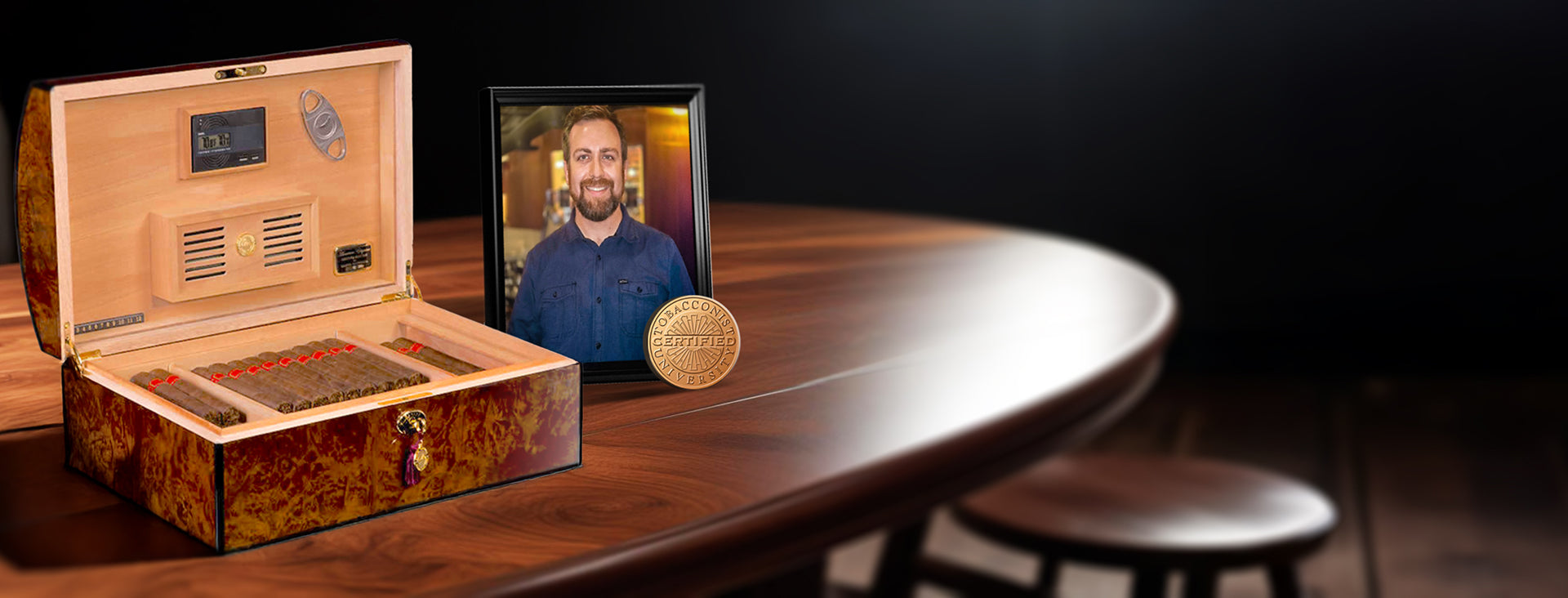
Acrylic vs Wooden Humidors: What's The Difference?
Walk into any serious conversation about cigar storage and wood wins by default. The assumption that a real humidor is a wooden one is so baked into the culture that acrylic alternatives are often dismissed before they're considered. That's a mistake - not because acrylic is better, but because it's genuinely better for certain situations, and knowing which one applies to you produces a meaningfully better outcome than defaulting to tradition.
What Are The Functional Differences Between Acrylic And Wood?
The core difference is in how each material handles humidity. Wood - specifically Spanish cedar - is hygroscopic, meaning it absorbs and releases moisture actively. This buffering capacity is one of the primary reasons cedar-lined wooden humidors have been the standard for centuries: the wood absorbs excess humidity when levels spike and releases it when levels drop, smoothing out fluctuations and creating a more stable environment than a passive sealed container. Acrylic doesn't buffer at all. It's inert. This means an acrylic humidor is entirely dependent on its humidification source to maintain the right conditions, with no natural assist from the container itself.
Put too much humidification in and it goes high and stays high. Put too little in and it drops faster than a cedar-lined box would allow. The practical implication is that acrylic humidors work best with precision humidification systems - Boveda packs being the obvious choice, because their two-way technology compensates for the absence of cedar buffering by actively managing both the addition and removal of moisture. An acrylic humidor running Boveda packs can maintain very consistent humidity; an acrylic humidor running a foam humidifier is asking for trouble.
What Are The Advantages Of Acrylic Humidors?
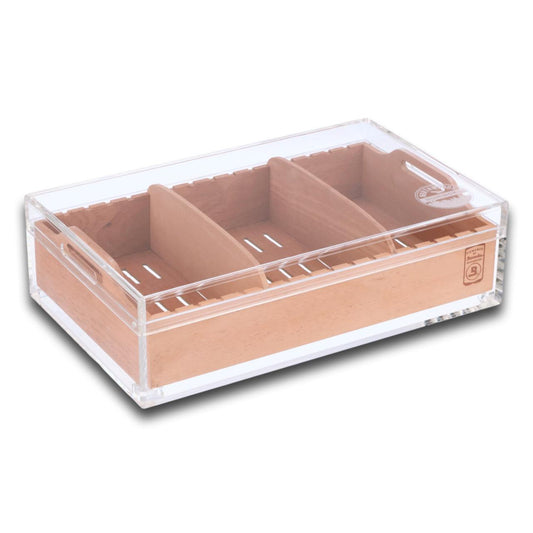
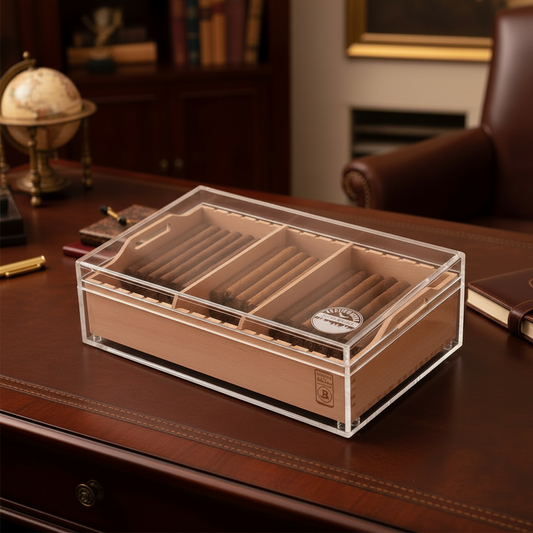
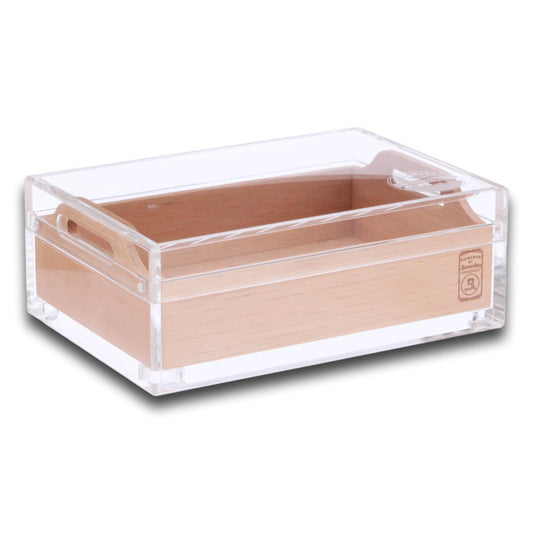
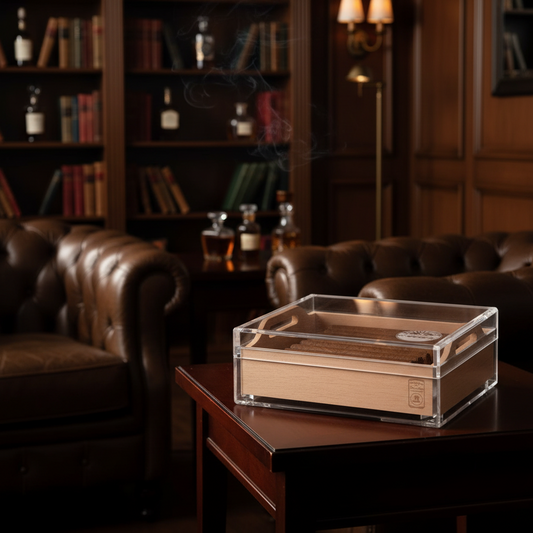
Visibility is the headline feature. You can see your entire collection at a glance without opening the lid - which matters for both practical management and the simple pleasure of seeing what you're working with. For collectors who like to display their cigars, an acrylic humidor is difficult to beat on that front. Maintenance of the container itself is simpler. There's no cedar to season, no wood to worry about cracking or warping, and no concern about the lining degrading over time. Wipe it down with a damp cloth and you're done.
This makes acrylic a genuinely lower-maintenance option for people who don't want the setup process and ongoing attention that a wooden humidor requires. Acrylic is also typically less expensive at comparable capacities, which makes it a sensible entry point for newer collectors who want a functional storage solution without committing significant money while they figure out how serious their hobby is going to become. The seal on quality acrylic humidors is often very good - sometimes better than wooden humidors at similar price points, because the manufacturing tolerances on machined acrylic are tighter than on hand-fitted wooden boxes.
What Are The Advantages Of Wooden Humidors?
The cedar factor. Everything that makes Spanish cedar the traditional lining material for humidors - its humidity buffering, its natural pest resistance, the subtle aromatic contribution it makes to the aging process - is only present in a wooden humidor. If you're aging cigars for years and want the full expression of what long-term storage can produce, wood with quality cedar lining is the environment that delivers it. Wooden humidors also tend to perform better over longer periods without intervention.
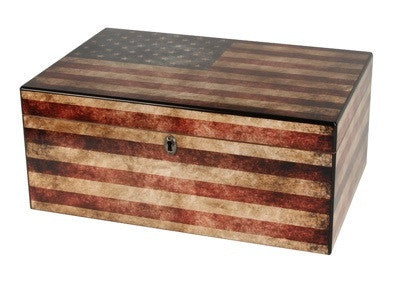
The cedar's buffering capacity also means they're more forgiving if you miss a humidity check for a week or two, and they tend to maintain more consistent conditions through ambient temperature changes that would cause an acrylic humidor to swing more dramatically. Aesthetically, a quality wooden humidor is simply a more beautiful object. And with electric humidor options aside, traditional wood construction in a well-made piece carries a craftsmanship value that acrylic can't replicate regardless of how functional it is.
Which Is Better For Aging Cigars?

Wood, clearly. The contribution of Spanish cedar to the aging process is not merely theoretical - the exchange of essential oils between the wood and the tobacco over months and years is a real phenomenon that affects the character of a well-aged cigar in ways that can't be replicated in an inert container. If aging is a priority, a quality wooden humidor with thick cedar lining is the right choice. For shorter-term storage - keeping your regular rotation fresh and accessible rather than developing a collection over years - the functional difference between acrylic and wood narrows considerably. A well-maintained acrylic humidor with appropriate humidification will preserve cigars perfectly well for weeks and months.
Which Is Better For Travel Or Secondary Storage?
Acrylic, typically. The lower cost, simplified maintenance, and durable construction make acrylic a sensible choice for a secondary humidor you keep in a car, an office, or a vacation property. The same logic applies to travel use, though dedicated travel humidors are a distinct category with their own design requirements. For collectors who want their primary aging storage in a beautiful wooden piece but need a practical secondary solution, an acrylic humidor as a satellite to the main collection is a setup that makes genuine sense.
Which Should You Choose?
The honest answer is that it depends on what you're using it for. New collector building a rotation and wanting something low-maintenance and visible: acrylic is a strong option. Serious enthusiast focused on long-term aging with the full cedar experience: wood. Both in one collection serving different roles: there's no reason you can't have both. Whatever you choose, construction quality matters more than material category. The high-end cigar cases by Elie Bleu represent what premium wooden construction looks like at the top of the market; at every level, a well-made humidor in either material will outperform a poorly made one in the other.
Why Northwoods Humidors
Northwoods Humidors carries the USA's largest selection of both wooden and acrylic humidors, alongside every accessory you need to set them up correctly. Founded by Kevin, a Certified Consumer Tobacconist with over a decade of hands-on expertise, Northwoods has fulfilled more than 35,000 orders with a 4.9-star rating and a 30-day return policy. If you're not sure which direction is right for your collection, Kevin and the team will help you figure it out. Browse the full humidor collection at Northwoods and shop with confidence.
FAQs
Do acrylic humidors need to be seasoned before use?
No, and this is one of their practical advantages. Because acrylic doesn't absorb moisture, there's no need to bring the material up to humidity before adding cigars. A clean acrylic humidor with an appropriate humidification source - ideally Boveda packs - can be used almost immediately. You'll still want to let the internal humidity stabilize and confirm it's reading at your target range before adding your entire collection, but the multi-day seasoning process required by wooden humidors is not necessary.
Can I add cedar trays or sheets to an acrylic humidor?
Yes, and many acrylic humidors come with Spanish cedar trays included. Adding cedar to an acrylic humidor gives you some of the benefits of both materials - the visibility and seal quality of acrylic with some of the buffering and aromatic contribution of cedar. The cedar won't perform quite as well as it would in a fully cedar-lined wooden box, but it's meaningfully better than a purely inert acrylic interior.
Does acrylic discolor or degrade over time?
Quality acrylic humidors made from thick, UV-resistant material hold up well over years of normal use. Lower-quality acrylic can develop a haze or yellowing, particularly with UV exposure. Keeping your acrylic humidor out of direct sunlight - which is good practice for any humidor - will extend its appearance and protect the cigars inside from UV exposure at the same time.
Is a wooden humidor always more expensive than acrylic?
Not necessarily. Entry-level wooden humidors and entry-level acrylic humidors overlap significantly in price. At the premium end, wooden humidors from top makers like Elie Bleu reach prices that reflect exceptional craftsmanship - lacquered veneers, precise hardware, hand-finished interiors - that has no real equivalent in acrylic. The price range for wood is simply wider.
What size acrylic humidor should I start with?
The same sizing logic that applies to wooden humidors applies to acrylic: buy for where your collection is going, not where it is now. Most new collectors find that they outgrow their first humidor faster than expected. A 50 to 75-count acrylic humidor is a practical starting point that gives you room to grow without the management complexity of a larger capacity while you're still learning your humidification routine.