Best Place To Keep A Cigar Humidor
Where you put your humidor is more important than most people realize - even seasoned cigar smokers.
This is because the environment around the humidor directly affects how hard it has to work to maintain stable internal conditions. A poor environment can lead to humidity swings, inconsistent aging, and the kind of gradual cigar deterioration that's hard to trace back to a specific cause. Getting the location right is one of the most underrated parts of good cigar storage - and knowing how to maintain humidor humidity is key.
What Environmental Conditions Does A Humidor Need?
The target inside a humidor is around 65 to 72 percent relative humidity and a temperature in the range of 65 to 70 degrees Fahrenheit. The closer the ambient environment is to those conditions, the less work the humidor's internal humidification system has to do, and the more stable the internal environment will be. Temperature stability is as important as the temperature itself - a humidor in a location that swings from warm to cool and back again will experience corresponding humidity fluctuations even if the average temperature is acceptable.
Think about the forces working against your humidor in any given location: direct sunlight raises temperature rapidly and unevenly, HVAC vents deliver dry or seasonally variable air directly to the humidor's exterior, exterior walls in cold climates cycle through significant temperature changes, and high-traffic areas involve repeated door openings that change ambient humidity. Each of these is avoidable with the right placement.
Where Should You Avoid Placing A Humidor?
Near windows is the most common mistake. Direct sunlight raises the temperature inside a humidor quickly, and UV exposure can damage both the exterior finish and, over time, the cigars themselves. Even indirect natural light near a window involves temperature variation that a humidor near an interior wall avoids entirely. On top of or directly adjacent to a refrigerator is another poor choice. Refrigerators radiate heat from their compressor coils and cycle through activity that creates local temperature variations.
The same logic applies to other heat-generating appliances. Air conditioning and heating vents are a significant problem that gets overlooked frequently. HVAC systems deliver low-humidity air directly into the room, and a humidor positioned in that airstream has to work constantly to compensate. Humidity depletion is faster, humidification refill is more frequent, and the cycling of dry air against the humidor's exterior makes stable conditions inside harder to achieve. Basements can work well in some climates - the temperature tends to be stable and cooler - but humidity in unfinished basements can be high enough to cause problems of the opposite kind, and moisture from concrete or potential flooding is a real risk for wooden humidors.
What Are The Best Locations In A Home?
An interior wall in a room with relatively consistent temperature is the ideal starting point. Interior walls don't experience the thermal cycling of exterior walls and aren't subject to the temperature differential that creates condensation risks in colder climates. A room that stays in the mid-60s to low 70s Fahrenheit year-round - a climate-controlled office or study, a finished den, a bedroom - provides a stable ambient environment that makes humidor maintenance easier and more reliable. Avoiding direct floor placement is worth considering in humid climates or older homes where floor-level moisture can be a factor. A shelf, sideboard, or dedicated cabinet provides a buffer from floor conditions and often integrates better with how you want to use and display the humidor.
Does The Size Of The Room Matter?

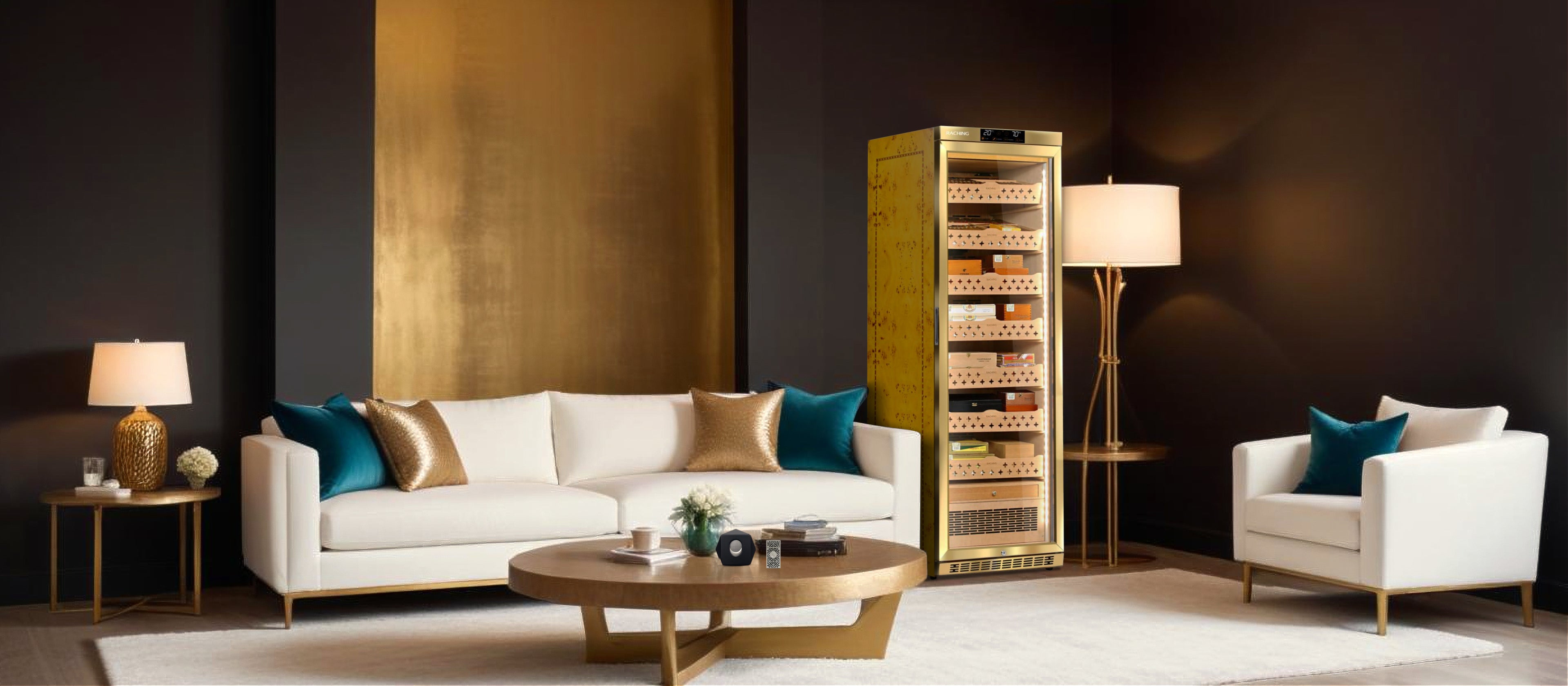
For most desktop humidors, not significantly. What matters more is local conditions at the specific placement spot rather than the room's overall size. A large room with a drafty window near the humidor is worse than a smaller, well-sealed room with no direct environmental stressors. For larger cabinet humidors, the room's ambient humidity becomes more relevant because the cabinet's internal volume and humidification system are working in closer concert with the surrounding air. Climate-controlled rooms, or rooms with a whole-home humidifier maintaining reasonable ambient humidity, reduce the workload on the cabinet's internal system and produce more consistent results.
Does The Quality Of The Humidor Reduce Location Sensitivity?
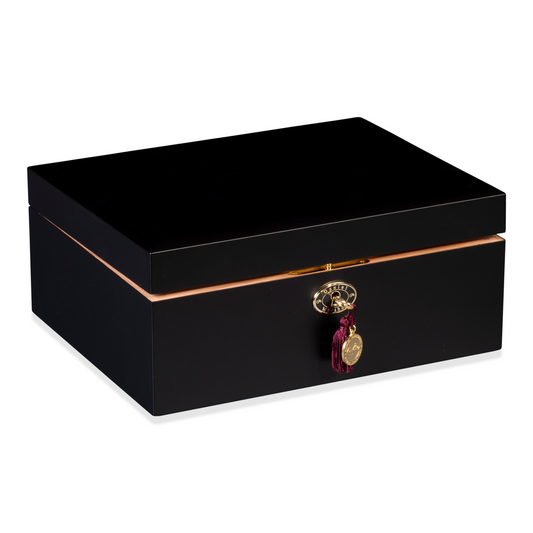
Substantially. A well-built humidor with a tight seal, thick Spanish cedar lining, and quality hardware is less sensitive to environmental variation than a poorly constructed one. The seal determines how much ambient air exchange occurs each time the humidor responds to external changes; the cedar's buffering capacity determines how well it absorbs and smooths out fluctuations before they affect the cigars. This is one of the practical arguments for investing in quality storage.
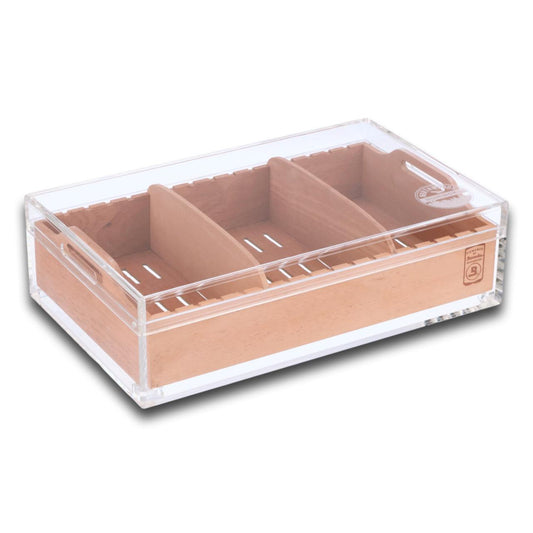
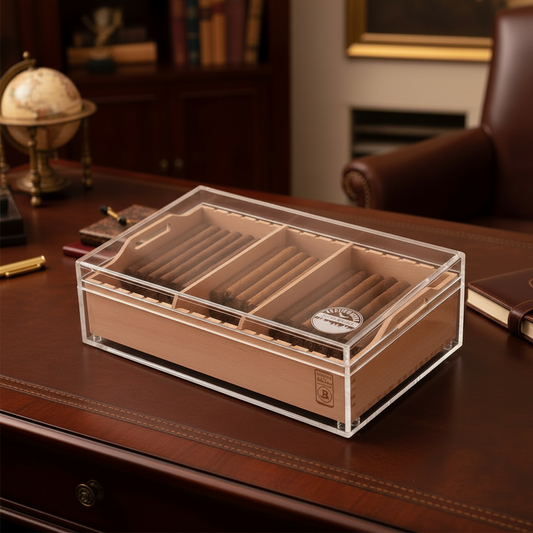
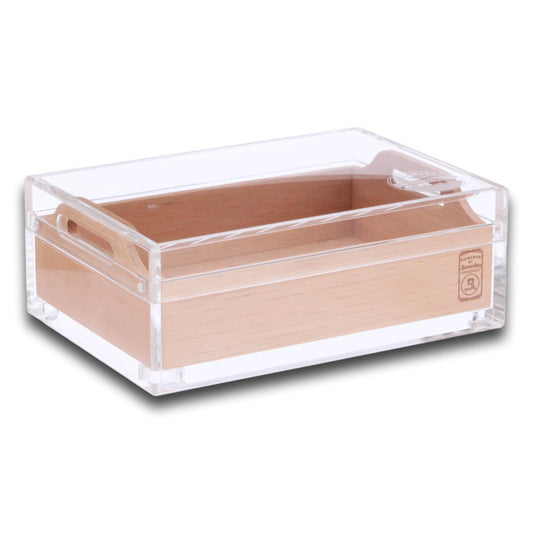
For example, Raching's handcrafted humidor range is engineered to maintain stable conditions even in less-than-ideal environments - the construction quality does meaningful work that cheaper alternatives can't.
Why Northwoods Humidors
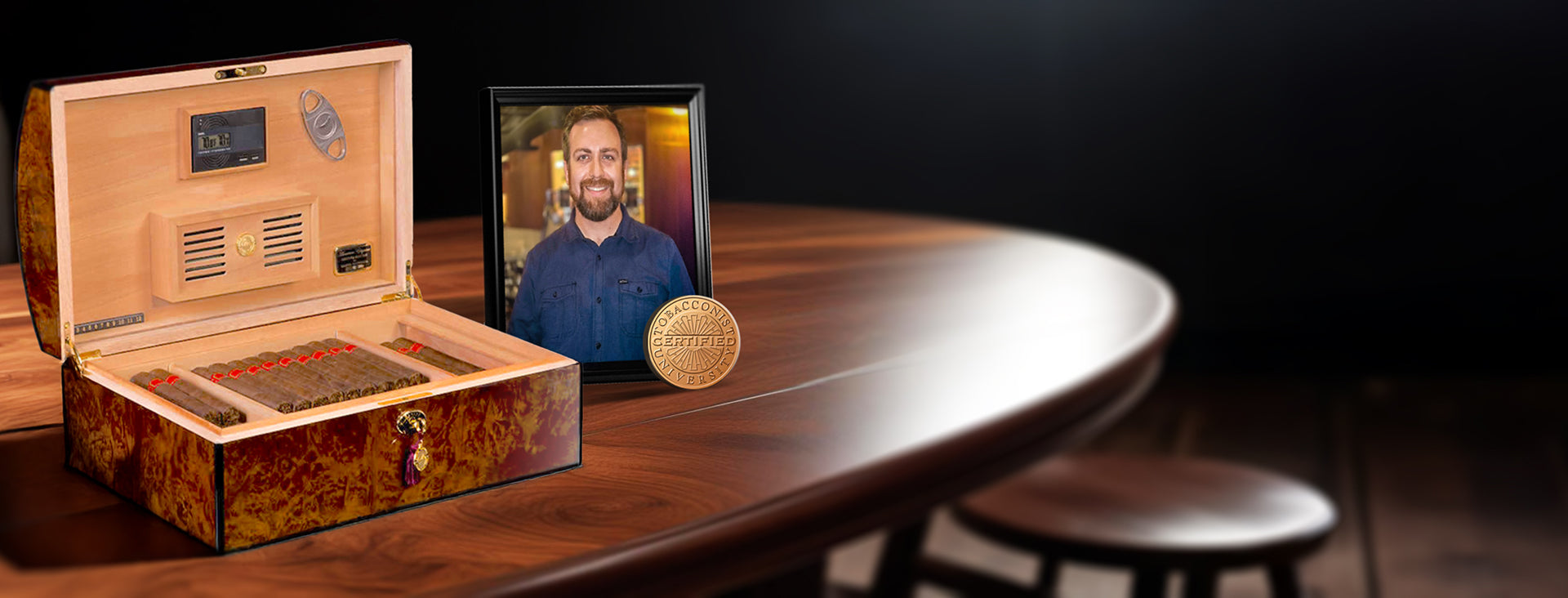
Northwoods Humidors carries the USA's largest selection of humidors and cigar accessories, backed by over a decade of expertise from founder Kevin, a Certified Consumer Tobacconist who personally advises customers on everything from sizing to placement. With 35,000+ orders fulfilled, a 4.9-star rating, and a 30-day return policy, Northwoods is the place serious collectors come back to. Shop the full humidor range at Northwoods Humidors and get the setup right from the start.
FAQs
Can I keep a humidor in a garage?
Generally not recommended. Garages are subject to wide temperature swings - hot in summer, cold in winter - and often have high ambient dust levels that can work their way into a humidor. The thermal cycling alone makes stable humidity maintenance very difficult. If the garage is fully climate-controlled and insulated to the same standard as the main living space, the situation changes, but that's the exception rather than the rule.
Is a basement a good location for a large cabinet humidor?
It can be, with caveats. Basements tend to have stable temperatures, which is a real advantage. The challenge is humidity: finished basements in dry climates may actually be too dry, while unfinished basements in humid climates can be too wet. A basement that maintains 60 to 65 percent ambient relative humidity and stays in the 65 to 70 degree Fahrenheit range is actually a very good humidor environment. Monitor conditions over a season before committing a large collection to basement storage.
Does placing a humidor near other wood furniture cause any issues?
Not typically. The concern would be if nearby furniture had finishes that off-gas chemical compounds in enclosed spaces, but in a standard open room this isn't a practical issue. The more relevant consideration is whether nearby furniture or shelving blocks airflow around the humidor in ways that create localized temperature or humidity pockets.
How often will I need to rehydrate my humidor if conditions are good?
In a stable, well-chosen location with a quality humidification source like Boveda packs, a properly seasoned desktop humidor typically needs attention every four to eight weeks. Passive humidifiers like foam-based or crystal units require more frequent monitoring. Digital hygrometers with min/max memory are the easiest way to track whether your humidor is maintaining conditions between checks without requiring daily attention.
Can I travel with my humidor, and does this affect where I normally keep it?
Travel humidors are separate products designed for short-term transport and are a better solution than moving your main humidor. If you frequently need cigars on the go, a dedicated travel humidor keeps your main storage undisturbed and means your primary collection isn't subject to the jostling and environmental exposure of regular transport. Your main humidor should stay in its chosen stable location as consistently as possible.